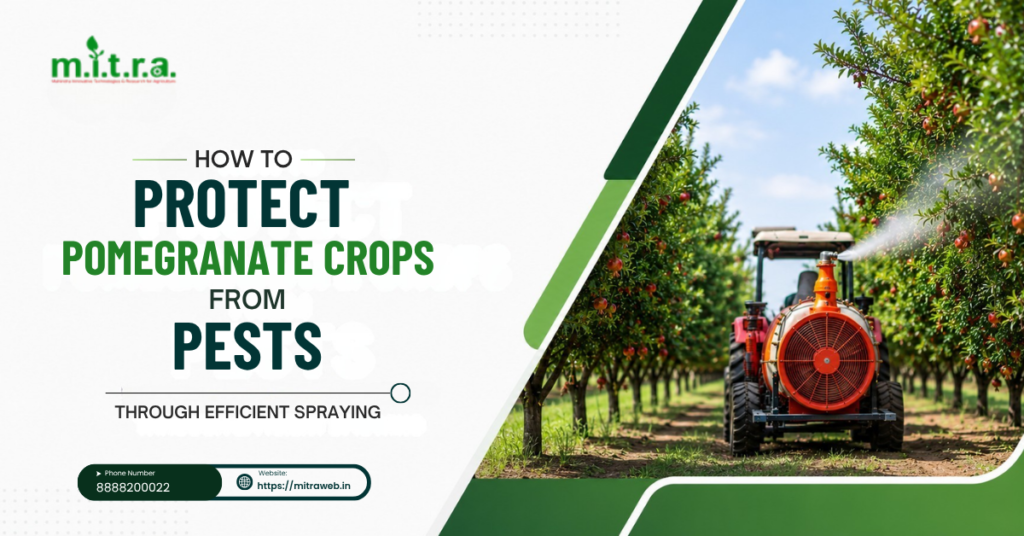
Pomegranate farming is one of the most profitable horticulture farming in India. But ask any experienced grower from Maharashtra, Karnataka, Gujarat, Rajsthan or Andhra Pradesh, and they’ll tell you the same thing: pests can destroy months of hard work in just a few weeks.
Studies indicate that pest infestations can reduce pomegranate yields significantly if not managed at the right time. Common threats such as aphids, thrips, mealybugs, fruit borers, and whiteflies not only damage fruits but also affect market quality and export potential. According to the Indian Council of Agricultural Research (ICAR), effective pest management practices can substantially improve both yield and fruit quality.
The good news? Modern spraying technology has made pest control more precise, economical, and effective than ever before. In this blog, we’ll explore the most common pomegranate pests, the importance of efficient spraying, and how choosing the right Pomegranate sprayer can help farmers protect their orchards while saving time, labor, and chemicals.
Why Pest Management Is Critical in Pomegranate Farming

Pomegranate fruits command premium prices in domestic and export markets. However, maintaining export-quality produce requires healthy fruits free from pest damage and residue issues.
Some common pests affecting pomegranate crops include:
- Aphids
- Thrips
- Mealybugs
- Fruit Borers
- Whiteflies
- Mites
These pests attack leaves, flowers, stems, and fruits, causing:
- Reduced fruit size
- Poor coloration
- Premature fruit drop
- Lower yield
- Reduced shelf life
As renowned agricultural scientist Norman Borlaug once said:
“You can’t build a peaceful world on empty stomachs and human misery.”
Protecting crops effectively is not just about productivity—it’s about securing farmer livelihoods.
Signs Your Pomegranate Orchard Needs Immediate Spraying
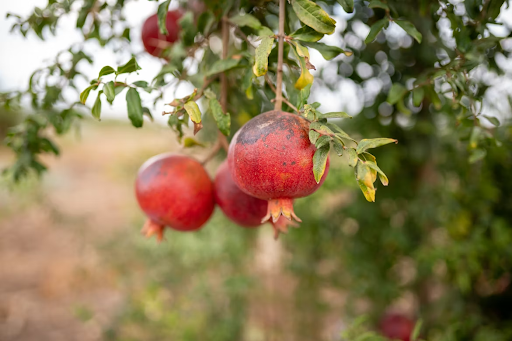
Early detection is the key to successful pest management.
Watch for these warning signs:
Yellowing or Curled Leaves
Often caused by aphids and sucking pests.
Sticky Honeydew Deposits
A common indicator of mealybug and aphid infestations.
Damaged Flowers
Thrips can severely affect flowering and fruit set.
Fruit Surface Damage
Borers and mites leave visible scars and deformities.
Reduced Plant Vigor
Stunted growth often points to hidden pest populations.
The earlier these symptoms are addressed, the lower the crop loss.
Why Traditional Spraying Methods Often Fail
Many farmers still rely on conventional spraying techniques that result in:
- Uneven chemical coverage
- Chemical wastage
- Increased labor costs
- Poor penetration inside dense canopies
- Higher pest survival rates
Pomegranate orchards have dense foliage, making it difficult for ordinary sprayers to reach inner leaves and fruit clusters effectively.
This is where a specialized Pomegranate sprayer becomes essential.
5 Ways Efficient Spraying Protects Pomegranate Crops
1. Achieves Uniform Coverage
Pests often hide beneath leaves and inside dense branches.
Modern air-assisted sprayers generate powerful airflow that carries spray droplets deep into the canopy, ensuring complete coverage. This significantly improves pest control efficiency.
2. Reduces Chemical Wastage
Precise spraying minimizes drift and overspraying.
Many advanced orchard sprayers are designed to deliver chemicals exactly where they are needed, helping farmers reduce input costs while maintaining effective protection.
3. Saves Labor and Time
Labor shortages remain a major challenge in Indian agriculture.
Efficient orchard sprayers can cover larger areas faster than manual methods, reducing labor dependency and improving operational efficiency.
4. Improves Fruit Quality
Better pest management directly translates into:
- Cleaner fruits
- Better appearance
- Higher market value
- Improved export readiness
Uniform spraying helps maintain healthier orchards throughout the crop cycle.
5. Supports Sustainable Farming
Reducing chemical usage while maximizing effectiveness supports more sustainable agricultural practices and lowers environmental impact.
Choosing the Right Pomegranate Sprayer
Not all sprayers are designed for orchard crops.
When selecting a pomegranate sprayer, farmers should consider the following:
Air-Assisted Technology
Air-assisted sprayers use high-velocity airflow to transport droplets throughout the canopy, improving penetration and coverage.
Tank Capacity
Choose tank sizes according to orchard size:
- 200-liter models for smaller farms
- 400–600 Litre models for medium orchards
- 800–1000 Litre models for larger commercial operations
Nozzle Configuration
Multiple adjustable nozzles provide precise chemical delivery and better coverage.
Ease of Maneuverability
Pomegranate orchards often have narrow row spacing.
Compact sprayer designs help operators navigate easily without damaging crops.
How MITRA Helps Pomegranate Farmers Spray More Efficiently
Over the years, MITRA has become one of India’s leading manufacturers of orchard and horticulture sprayers. The company develops spraying solutions specifically for crops such as pomegranate, grapes, mango, orange, guava, and other orchard crops.
Its range includes:
- Air Blast Sprayers
- Orchard Sprayers
- Tractor Mounted Sprayers
- Tractor Trailed Sprayers
- Vineyard Sprayers
MITRA Airotec Turbo Series
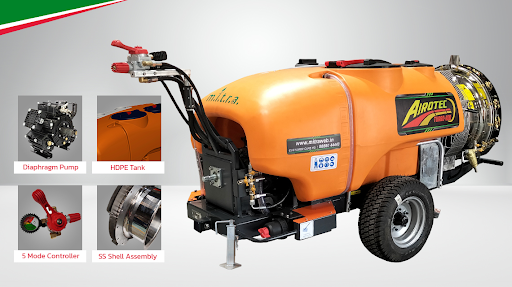
For pomegranate growers, the Airotec Turbo range offers several advantages:
- High air output for deeper canopy penetration
- Uniform spray coverage
- Chemical savings
- Labor savings
- Accurate nozzle control
- Durable, chemical-resistant tanks
- Suitable models for pomegranate orchards of different sizes
Popular options include:
- Airotec Turbo 200L
- Airotec Turbo 400L
- Airotec Turbo 600L
- Airotec Turbo 800L
These models are specifically suitable for pomegranate cultivation and modern orchard management.
Best Spraying Practices for Pomegranate Farmers
Even the best Pomegranate sprayer performs optimally when used correctly.
Follow these practices:
Spray at the Right Time
Early morning or late evening reduces evaporation and drift.
Monitor Pest Populations
Avoid unnecessary spraying by scouting regularly.
Calibrate Equipment
Ensure correct pressure, nozzle settings, and droplet size.
Rotate Chemicals
Prevent pest resistance by alternating active ingredients.
Maintain Equipment
Clean filters, nozzles, and tanks regularly for consistent performance.
Conclusion
Successful pomegranate farming depends on proactive pest management. As pest pressure increases and labor availability becomes more challenging, efficient spraying is no longer optional—it’s a necessity.
A modern Pomegranate sprayer helps farmers achieve better coverage, reduce chemical wastage, save labor, and improve fruit quality. By combining proper pest monitoring with advanced orchard spraying technology from trusted manufacturers like MITRA, growers can protect their investment and move closer to achieving healthier orchards and higher profitability.
Whether you’re managing a small orchard or a large commercial plantation, investing in efficient spraying solutions today can make a significant difference to your crop performance tomorrow.