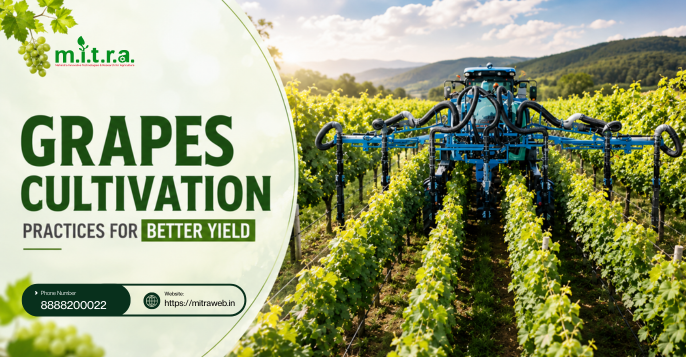
Grapes are the most valuable fruit crops cultivated in India, offering excellent income opportunities for farmers and vineyard owners. Maharashtra leads grape production in the country, followed by Karnataka, Tamil Nadu, Andhra Pradesh, and Telangana. With the increasing demand for fresh table grapes and processed products like raisins and juice, adopting scientific cultivation practices has become more important than ever.
A successful vineyard depends on proper planning and timely management at every stage of crop growth. From selecting the right variety and preparing the soil to pruning, irrigation, and pest management, every practice contributes to higher productivity and superior fruit quality. By following the right cultivation techniques, using organic fertilisers, and using the right grape sprayers, farmers can reduce crop losses, improve grape quality, and maximise their profits.
Here are 10 essential grape cultivation practices that every Indian grape grower should follow for better yield.
1. Select the Right Grape Variety
Choosing the right grape variety is the first step toward establishing a productive vineyard. The variety should suit your local climate, soil type, and market demand. Some of the most popular grape varieties grown in India include Thompson Seedless, Sharad Seedless, Sonaka, Flame Seedless, Bangalore Blue, and Manik Chaman.
Always purchase certified, disease-free planting material from trusted nurseries. Healthy vines establish quickly, produce stronger root systems, and deliver consistent yields over several years.
2. Prepare the Soil for Healthy Vine Growth
Soil health plays a major role in grape production. Grapevines perform best in well-drained sandy loam to clay loam soils with a pH ranging from 6.5 to 8.0. Before planting, conduct a soil test to determine nutrient availability and soil condition.
Incorporate well-decomposed farmyard manure (FYM), compost, or organic matter to improve soil fertility and water retention. Proper drainage is equally important because waterlogged conditions can damage roots, encourage fungal diseases, and reduce plant growth.
A fertile and well-prepared soil creates the ideal environment for healthy vines and higher fruit production.
3. Follow Proper Planting and Vineyard Training
Proper spacing between vines ensures sufficient sunlight and air circulation, both of which are essential for healthy growth and disease prevention. Farmers should follow the recommended spacing according to the selected grape variety and training system.
Support structures such as trellis or bower systems help vines grow efficiently while making pruning, spraying, harvesting, and other field operations easier. A well-designed vineyard layout also improves worker movement and overall crop management.
4. Adopt Efficient Irrigation Practices
Water management directly affects grape yield and fruit quality. Drip irrigation is the most suitable method for grape cultivation because it delivers water directly to the root zone while minimising wastage.
Maintaining consistent soil moisture during flowering and berry development is particularly important. Excess irrigation may lead to fruit cracking and poor sweetness, while inadequate watering can reduce berry size and bunch weight.
Farmers can further improve water-use efficiency by combining drip irrigation with fertigation, allowing nutrients to reach the plant roots more effectively.
5. Use a Grape Sprayer
Using a grape sprayer is essential for effective pest and disease management in vineyards. Unlike manual spraying, a grape sprayer provides uniform coverage across the leaves, bunches, and vine canopy, ensuring pesticides, fungicides, and foliar nutrients reach every part of the plant. This improves the effectiveness of crop protection while reducing chemical wastage and labour costs.
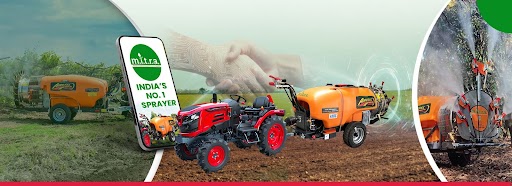
Well-maintained grape sprayers also help farmers complete spraying operations quickly, making it easier to manage large vineyards. For the best results, always use the appropriate nozzle, maintain proper spray pressure, and spray during calm weather conditions. Investing in the right grape sprayers can significantly improve vine health, fruit quality, and overall grape yield.
Check out the right grape sprayers for your vineyard at MITRA
6. Provide Balanced Nutrition
Grapevines require a balanced supply of nutrients throughout their growth cycle. Nitrogen promotes vegetative growth, phosphorus supports root development, and potassium improves berry size, sweetness, and overall fruit quality.
Micronutrients such as zinc, boron, calcium, magnesium, and iron are equally important for healthy vine development and preventing nutrient deficiencies.
Regular soil and leaf testing helps farmers apply fertilisers according to crop requirements instead of following fixed schedules. Integrating organic manures, compost, and biofertilizers with chemical fertilisers also improves soil structure and long-term vineyard productivity.
7. Carry Out Timely Pruning
Pruning is one of the most critical operations in grape cultivation. It removes old and unproductive shoots while encouraging the growth of healthy fruiting canes. Proper pruning improves sunlight penetration and air circulation, which helps reduce disease incidence.
Timely pruning also promotes uniform bunch development, larger berries, better fruit colour, and higher yields. Since pruning schedules vary by region and variety, farmers should follow recommendations provided by horticulture experts or local agricultural departments.
8. Keep the Vineyard Free from Weeds
Weeds compete with grapevines for water, nutrients, and sunlight, reducing crop performance and increasing production costs. Effective weed management helps vines utilise available resources more efficiently.
Farmers can control weeds through manual weeding, mulching, mechanical cultivation, or the judicious use of herbicides where recommended. Organic mulches not only suppress weeds but also conserve soil moisture and improve soil health over time.
Maintaining vineyard hygiene by removing diseased leaves, fallen fruits, and pruned branches also helps reduce pest and disease pressure.
9. Protect the Crop from Pests and Diseases
Grapevines are susceptible to several pests, including thrips, mealybugs, mites, and flea beetles. They are also prone to diseases such as powdery mildew, downy mildew, anthracnose, and bunch rot, all of which can significantly affect yield and fruit quality.
Farmers should regularly inspect their vineyards to detect early signs of infestation. Following Integrated Pest Management (IPM) practices, such as field monitoring, biological control, proper canopy management, and need-based pesticide application, helps keep pest populations under control while minimising chemical use.
Preventive measures are always more effective and economical than treating severe infestations.
10. Harvest at the Right Stage and Handle Fruits Carefully
Harvesting grapes at the correct maturity stage ensures superior fruit quality and better market prices. Farmers should assess berry colour, size, firmness, and sweetness before harvesting. Measuring Total Soluble Solids (TSS) can also help determine the ideal harvesting time.
Harvest grapes during the cool morning hours to preserve freshness and minimise field heat. After harvesting, carefully sort, grade, and pack the bunches to prevent damage during transportation. Proper post-harvest handling and storage help maintain fruit quality, extend shelf life, and improve returns, especially for export-quality grapes.
11. Use the Right Grapes Sprayer for Efficient Crop Protection
Proper spraying is an essential part of grape cultivation, especially because grapevines have dense canopies that require uniform chemical coverage. Using a high-quality grape sprayer helps farmers apply pesticides, fungicides, insecticides, and foliar nutrients more effectively.
A reliable grape sprayer ensures uniform spray distribution across leaves, bunches, and hidden canopy areas where pests and diseases often develop. Better spray coverage improves the effectiveness of crop protection products while reducing chemical wastage and saving labour costs.
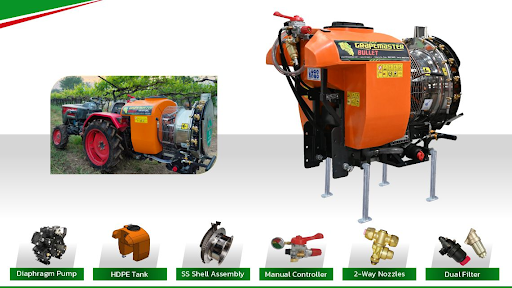
Farmers should regularly maintain and calibrate their grape sprayers, choose the correct nozzle type, and spray during calm weather conditions for maximum efficiency. Investing in the right spraying equipment contributes significantly to healthier vines, better fruit quality, and improved yields.
Choose Right sprayers for the healthy crop: MITRA
Conclusion
Higher grape production is the result of consistent vineyard management rather than a single farming practice. By selecting suitable varieties, preparing healthy soil, following proper irrigation schedules, applying balanced nutrition, pruning on time, managing weeds, and protecting vines from pests and diseases, farmers can significantly improve both yield and fruit quality.
The use of a reliable sprayer further enhances crop protection by ensuring uniform spray coverage and efficient application of plant protection products. When these scientific cultivation practices are followed together, Indian grape growers can reduce crop losses, produce premium-quality grapes, and achieve better profitability season after season. Investing in modern vineyard management techniques today will ensure a healthier, more productive, and sustainable grape farming enterprise for the future.